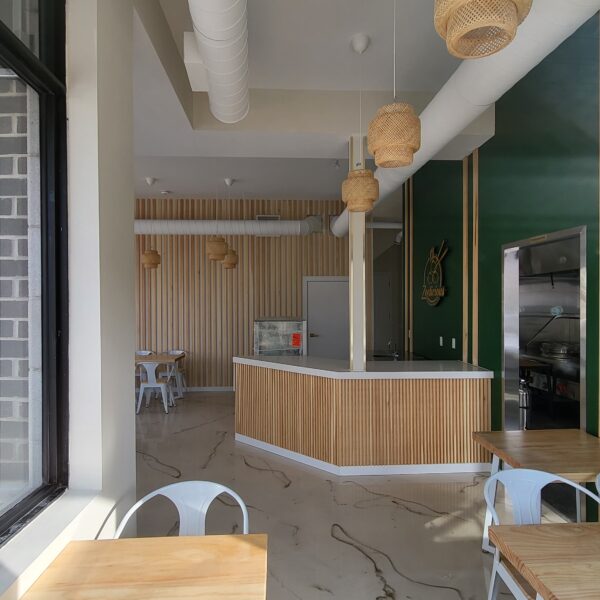
Commercial construction is the engine behind every restaurant, retail store, clinic, and office that opens its doors in Canada. For business owners, it's also one of the largest investments they'll ever make - and one of the most poorly understood. This guide breaks down what commercial construction actually is, the different project types you'll encounter, what drives cost and timeline, and how to avoid the pitfalls that catch first-time builders.
What Is Commercial Construction?
Commercial construction refers to any building project for a property used for business rather than living. That covers a huge range: ground-up plazas, full warehouse builds, multi-floor office renovations, tenant fit-outs in existing shells, and major mechanical or structural upgrades to operating businesses. In every case, the work has to comply with provincial building codes, municipal zoning, fire codes, and discipline-specific regulations covering plumbing, electrical, mechanical, gas, and accessibility.
What separates commercial work from residential isn't just scale - it's complexity. Commercial projects involve heavier mechanical systems, stricter fire-rating requirements, higher occupant load calculations, and more rigorous inspections. They also touch more stakeholders: landlords, franchisors, lenders, insurance providers, municipal inspectors, utilities, and signage authorities all weigh in before you open.
The Main Types of Commercial Construction Projects
1. Tenant Fit-Outs
Most Canadian business owners experience commercial construction through a tenant fit-out: you lease a unit in a plaza, mall, or office tower, and the landlord delivers a "base building" shell with demising walls, basic HVAC, and electrical service. Everything inside - kitchens, washrooms, customer-facing finishes, signage, equipment - is your scope. Fit-outs typically run 8 to 20 weeks depending on use type.
2. Renovations and Adaptive Reuse
Renovations involve gutting and rebuilding an existing space, often for a different use than before. A former retail unit becomes a quick-service restaurant; an old office becomes a medical clinic. These projects are surprisingly complex because they require asbestos and hazardous-materials assessments, mechanical upgrades to handle new occupancy types, and code reviews to confirm whether the existing structure can support the new use.
3. Ground-Up Construction
Building from raw land or a demolished site. This includes site servicing, foundations, structural steel, building envelope, and all interior systems. Ground-up commercial construction runs 8 to 18 months for most small-to-mid-size buildings and requires earlier engagement with civil engineers, geotechnical consultants, and the municipality's planning department.
4. Specialty Builds
Some commercial projects are defined by their use type: medical and dental clinics, veterinary hospitals, commercial kitchens, daycares, and cannabis retail are governed by additional regulations beyond the standard building code. These specialty builds require contractors who understand the specific HVAC, plumbing, infection control, and security requirements baked into provincial law.
What Drives Commercial Construction Cost in Canada
There's no single "price per square foot" for commercial construction. Cost is driven by five main factors:
- Use type. A quick-service restaurant with a full commercial kitchen costs 3-4x more per square foot than a retail clothing store of the same size.
- Base building condition. A shell space with no existing services is more expensive than taking over a unit that was previously the same use type.
- Finish quality. Brand-standard franchise finishes, custom millwork, and premium flooring drive cost significantly.
- Mechanical and electrical scope. Adding a grease trap, hood system, medical gas, or three-phase power can each add tens of thousands.
- Location. Toronto, Vancouver, and Calgary labour rates run higher than secondary markets, and permit timelines vary widely by municipality.
For tenant fit-outs in 2026, expect roughly $100-$200 per square foot for retail and office, $200-$350 for general restaurant, $300-$450 for QSR with full kitchens, and $250-$400 for medical and dental clinics. Ground-up construction is quoted separately and starts well above these ranges.
How Long Does Commercial Construction Take?
For tenant fit-outs, the construction phase itself is usually 8 to 16 weeks. But the total timeline from lease signing to opening is much longer because of design and permits. Expect:
- Design and engineering: 3-6 weeks
- Permit approval: 3-8 weeks (varies hugely by municipality)
- Equipment procurement: 6-10 weeks, running in parallel
- Construction: 8-16 weeks
- Inspections and occupancy: 1-2 weeks
A realistic end-to-end timeline is 4 to 6 months for a standard fit-out. Owners who don't plan in parallel - waiting for permits before ordering equipment, or finalizing design after lease signing - routinely add 6-12 weeks of avoidable delay.
Permits, Inspections, and Code Compliance
Every commercial project needs a building permit. Most also need separate permits for plumbing, electrical, mechanical, gas, and signage. For a deeper dive on the permit process, see our guide to commercial construction permits in Canada. The critical takeaway: applications must be complete, drawings must be sealed by licensed engineers, and any deficiency restarts the review clock. A good contractor builds the permit submission into the design phase so it lands on the municipality's desk the day drawings are stamped.
Hiring the Right Commercial Contractor
The contractor you choose has more impact on your project than any other decision. Look for relevant experience in your specific use type, verifiable references, proper insurance and WSIB coverage, transparent line-item pricing, and on-site presence from company leadership. Our full guide on how to choose a commercial contractor walks through the red flags to watch for and the questions to ask before signing.
For franchise owners specifically, the bar is higher: your contractor needs to already understand your brand's construction manual and corporate approval process. The wrong contractor can add weeks of back-and-forth with the franchisor's construction team.
The Trivex Approach to Commercial Construction
Trivex Group is a partner-operated commercial construction firm working across Ontario, Atlantic Canada, and the Prairies. We specialize in franchise construction, restaurant builds, medical and dental clinics, and office and retail fit-outs. On every project, a Trivex owner is directly involved - no project-manager layers between the decision-maker and the job site. That's the model that has produced 250+ on-time, on-budget commercial builds.
Frequently Asked Questions
What is commercial construction?
Commercial construction is the building, renovation, or fit-out of any property used for business rather than residential purposes. This includes restaurants, retail stores, offices, medical and dental clinics, warehouses, hotels, and multi-tenant plazas. In Canada, commercial construction is governed by provincial building codes, municipal zoning bylaws, and discipline-specific regulations for electrical, plumbing, mechanical, and fire safety work.
How much does commercial construction cost per square foot in Canada?
Commercial construction costs in Canada generally range from $100 to $400 per square foot for tenant fit-outs, depending on the use type, finish quality, and location. Quick-service restaurants and medical clinics sit at the higher end of that range due to specialized equipment, plumbing, HVAC, and code requirements. Office and retail fit-outs are typically less expensive per square foot. Ground-up construction costs significantly more and is quoted separately.
Who do I hire first - architect or contractor?
For most commercial fit-outs, engage your contractor early - ideally at the same time as your architect. A good commercial contractor will provide constructability feedback on the design before it's locked in, identify long-lead items so procurement can start in parallel with permits, and help you avoid expensive design choices that don't add value. Engaging only at the bidding stage forces you to take whichever number you receive, with no real ability to value-engineer.
Planning a Commercial Construction Project?
Trivex Group has delivered 250+ commercial fit-outs across Canada - on time and on budget. Tell us about your project and we'll give you a realistic timeline and price.
Get Free Estimate