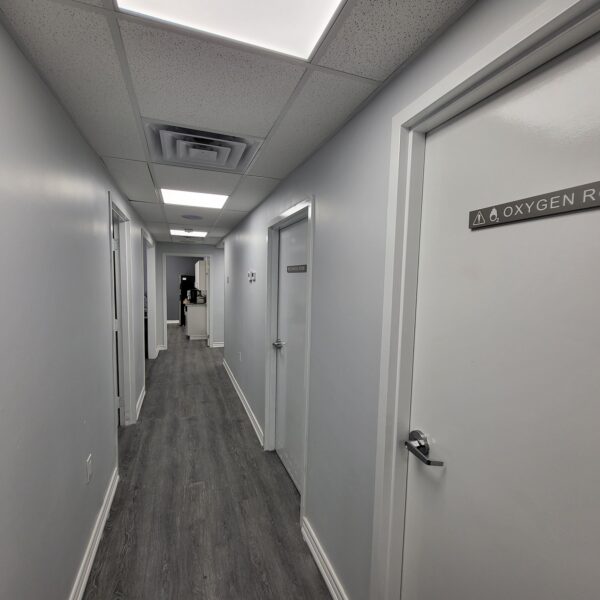
Building a medical clinic in Ontario is fundamentally different from building a retail store or office space. Healthcare facilities must meet stringent requirements under the Ontario Building Code (OBC), provincial health regulations, and federal accessibility standards that don't apply to standard commercial construction. Getting these requirements wrong doesn't just mean failing an inspection - it can mean shutting down your practice before it opens. Here's what you need to know before breaking ground on a medical clinic construction project in Ontario.
Ontario Building Code Requirements for Medical Facilities
The Ontario Building Code classifies medical clinics under Group D (Business and Personal Services) occupancy, but the specific requirements depend on the services you provide. A walk-in clinic with basic examination rooms has different code requirements than a surgical centre with procedure rooms. The key areas where medical construction diverges from standard commercial builds include ventilation, plumbing, electrical, accessibility, and infection control.
Key Construction Requirements
HVAC: Enhanced Air Exchanges and Filtration
Standard commercial HVAC provides roughly 4 air changes per hour (ACH). Medical clinics require significantly more. Examination rooms typically need a minimum of 6 ACH, while procedure rooms and surgical suites can require 15 to 25 ACH depending on the procedures performed. The HVAC system must also maintain specific pressure relationships between spaces - procedure rooms are often positive pressure to keep contaminants out, while isolation rooms require negative pressure to contain airborne pathogens. All medical HVAC systems should include enhanced filtration (MERV 14 minimum for most clinical spaces) and must be designed to prevent recirculation of contaminated air between treatment areas.
Medical Gas Systems
If your clinic provides sedation, emergency care, or dental services, you'll need a medical gas system. This includes piped oxygen, nitrous oxide (for dental), medical air, and vacuum systems. These systems must comply with CSA Z7396.1 (Medical Gas Pipeline Systems) and require specialized contractors for installation and certification. Medical gas outlets must be located at specific heights and positions relative to patient care equipment, and the entire system requires pressure testing and certification before the facility can operate.
Infection Control Surfaces and Materials
Every surface in a clinical treatment area must be cleanable and resistant to hospital-grade disinfectants. This means seamless flooring (sheet vinyl or epoxy) in treatment rooms instead of tile with grout lines where bacteria can harbour. Wall surfaces must be smooth, non-porous, and able to withstand repeated chemical cleaning. Ceilings in procedure areas should be washable - standard acoustic ceiling tiles are generally not acceptable. Countertops in treatment areas require solid surface materials (like Corian) or stainless steel rather than laminate. These material specifications significantly affect both the construction budget and the long-term maintenance costs of the facility.
Accessibility: AODA Compliance
Ontario's Accessibility for Ontarians with Disabilities Act (AODA) sets strict standards for healthcare facilities in Ontario. Requirements include barrier-free entrance paths, accessible washrooms with specific turning radii, reception counters at wheelchair height, examination rooms large enough for wheelchair transfers, and accessible signage with Braille and tactile elements. Medical clinics must also provide accessible parking spaces proportional to the total lot size, with signage and surface markings that comply with municipal by-laws.
Plumbing: Medical-Grade Requirements
Medical clinics require more plumbing fixtures than standard commercial spaces. Every examination room needs a hand-washing sink (hands-free operation is strongly recommended). Procedure rooms require scrub sinks with wrist-blade or sensor-operated faucets. Dental clinics need specialized plumbing including amalgam separators (required by Ontario Regulation 347 to prevent mercury from entering the wastewater system), high-volume suction lines, and water lines for dental units. Hot water systems must maintain temperatures that prevent Legionella growth while also providing tempered water at fixtures to prevent scalding.
Electrical: Emergency Power and Medical-Grade Circuits
Healthcare facilities in Ontario must have emergency power provisions. While a full generator may not be required for a small walk-in clinic, essential lighting, fire alarm systems, and critical medical equipment must have backup power. Larger clinics and surgical centres require a properly sized generator with automatic transfer switches. Medical-grade electrical circuits are needed in procedure areas - these are isolated power systems that reduce the risk of electrical shock to patients and include line isolation monitors. Electrical panels must have sufficient capacity for medical imaging equipment, which can have very high power demands.
Radiation Shielding
If your clinic includes diagnostic imaging (X-ray, CT, panoramic dental X-ray), the rooms housing this equipment require radiation shielding. A qualified medical physicist must calculate the required shielding based on the equipment type, workload, and occupancy of adjacent spaces. Shielding typically involves lead-lined drywall, leaded glass viewing windows, and lead-lined doors. The shielding design must be approved by the Ontario Ministry of Health's X-ray inspection program before the equipment can be installed and operated.
Dental vs. Medical vs. Veterinary: Key Differences
While all three facility types share common healthcare construction requirements, each has distinct considerations:
- Dental clinics require medical gas piping (nitrous oxide, oxygen), amalgam separators, high-volume evacuation systems, and radiation shielding for intraoral and panoramic X-ray equipment. Operatory rooms need specific electrical configurations for dental chairs and curing lights.
- Medical clinics focus more heavily on HVAC and infection control, especially if procedures are performed. Examination rooms have simpler equipment requirements but stricter air handling standards. Walk-in clinics need space for minor procedures, specimen collection, and potentially immunization areas with cold storage.
- Veterinary clinics have unique requirements including kennel drainage systems, enhanced sound isolation between treatment areas and recovery kennels, specialized flooring that resists animal waste, and separate ventilation zones to manage odour and airborne allergens. Our Twin Lake Veterinary Hospital project is a good example of how these specialized requirements come together in a real build - from custom kennel drainage to dedicated surgical suite ventilation.
Common Compliance Issues
Based on our experience building healthcare facilities across Ontario, these are the compliance issues that most frequently cause inspection failures and project delays:
- Inadequate ventilation design - Undersized HVAC systems that don't meet the required air changes per hour for clinical spaces. This is the single most common issue we encounter when reviewing plans from contractors without medical construction experience.
- Wrong flooring in treatment areas - Tile, carpet, or laminate flooring used in areas that require seamless, non-porous surfaces. Replacing flooring after construction is extremely expensive and disruptive.
- Missing emergency power provisions - Failing to plan for backup power for essential systems. Retrofitting generator capacity after the build is significantly more expensive than including it in the original design.
- Non-compliant accessibility - Washrooms with insufficient turning radius, examination rooms too small for wheelchair access, or entrance paths that don't meet barrier-free requirements. AODA compliance is not optional.
- Inadequate radiation shielding - Insufficient lead lining discovered during the X-ray equipment certification process, requiring wall demolition and reconstruction.
The Inspection Process for Healthcare Facilities
Healthcare facility construction in Ontario involves more inspection touchpoints than standard commercial builds. In addition to the standard building department inspections (framing, rough-in, insulation, final), you'll face inspections from the fire marshal (suppression systems and alarms), the local public health unit (if applicable), the Ontario Ministry of Health X-ray inspection program (if imaging is installed), and potentially the College of Physicians and Surgeons of Ontario for procedure room standards. Your contractor must coordinate all of these inspections in the right sequence to avoid delays - a failed health inspection can hold up your occupancy permit even if all building inspections have passed.
Why Specialized Contractors Matter for Medical Builds
A general commercial contractor can frame walls and hang drywall, but medical clinic construction requires a contractor who understands healthcare-specific code requirements, infection control construction protocols, medical gas system installation, and the inspection process for healthcare facilities. At Trivex Group, we've built medical clinics, dental offices, and veterinary hospitals across Ontario, and we understand the requirements that are specific to each type of healthcare facility. From HVAC design coordination to AODA compliance to radiation shielding installation, we manage every aspect of your medical build so nothing falls through the cracks.
What HVAC requirements apply to medical clinics in Ontario?
Medical clinics in Ontario require enhanced HVAC systems that exceed standard commercial specifications. Examination rooms typically need a minimum of 6 air changes per hour, while procedure rooms may require 15 or more. Negative pressure rooms are required in facilities that handle infectious patients. All systems must include HEPA filtration or equivalent, and the design must prevent cross-contamination between treatment areas, waiting rooms, and administrative spaces.
Do dental clinics have different construction requirements than medical clinics in Ontario?
Yes. Dental clinics have unique requirements including medical gas systems (nitrous oxide and oxygen piping), high-volume evacuation systems for aerosol control, specialized plumbing with amalgam separators to prevent mercury from entering the wastewater system, and radiation shielding for X-ray rooms. Dental operatories also require specific electrical configurations for dental chairs, curing lights, and imaging equipment. These additions typically add 15-25% to the construction cost compared to a general medical clinic of similar size.
Building a Medical Clinic? Get Expert Help.
From HVAC design to AODA compliance to final inspections, Trivex manages every aspect of healthcare facility construction in Ontario.
Get Free Estimate